
 Español
 Pусский
 한국어
한국어 العربية
Seismic Detection
Certainly — here is a 500-word English description of Seismic Detection without any company names:---Seismic DetectionSeismic detection is the process of identifying and analyzing ground vibrations caused by natural or artificial sources. It plays an important role in understanding the Earth’s structure, monitoring geological activity, and supporting safety in industries such as energy, construction, and environmental protection. By measuring seismic waves that travel through the ground, scientists and engineers can obtain valuable information about subsurface conditions and detect events that may not be visible on the surface.The basic principle of seismic detection is the capture of vibration signals using sensitive instruments such as geophones, accelerometers, and seismic sensors. These devices convert ground motion into electrical signals that can be recorded and processed. The collected data is then analyzed to determine the location, strength, depth, and type of seismic event. This makes seismic detection essential for earthquake monitoring, mineral exploration, underground mapping, and structural health assessment.In earthquake science, seismic detection helps identify when and where an earthquake occurs. Networks of sensors placed in different locations can record the arrival times of seismic waves, allowing experts to estimate the epicenter and magnitude of the event. Early detection systems can provide critical alerts before strong shaking reaches populated areas, giving people and organizations time to prepare and reduce damage.Seismic detection is also widely used in resource exploration. In the oil, gas, and mining industries, controlled seismic signals are sent into the ground and reflected waves are measured to create detailed images of underground formations. This information helps locate reservoirs, identify rock layers, and evaluate the geological conditions of a site before drilling or excavation begins. As a result, seismic detection improves operational efficiency and reduces exploration risk.Another important application is infrastructure monitoring. Bridges, tunnels, dams, railways, and large buildings can be equipped with seismic detection systems to track vibrations caused by earthquakes, heavy traffic, machinery, or structural stress. Continuous monitoring helps detect early signs of damage or instability, supporting preventive maintenance and improving public safety.Modern seismic detection systems rely on advanced digital processing, wireless communication, and data analytics. Real-time monitoring platforms can collect large volumes of information and automatically filter background noise, classify events, and identify anomalies. In some cases, artificial intelligence and machine learning are used to improve accuracy and speed of detection. These technologies make seismic monitoring more effective in both remote and urban environments.Seismic detection continues to grow in importance as the need for hazard awareness and underground knowledge increases. Whether used to study earthquakes, locate natural resources, or protect critical infrastructure, it provides a powerful way to observe hidden activity beneath the Earth’s surface. Its combination of precision, reliability, and practical value makes it a vital tool in science, engineering, and safety management.---If you want, I can also make it:1. more technical2. more simple and readable3. formatted for a product page or website
Products
Category:
-
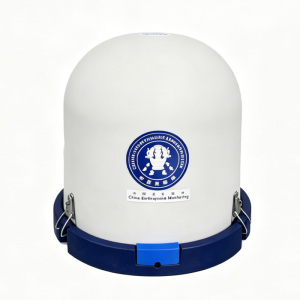
Earthquake Monitoring
Category: Rotomolding BoxBrowse number: 253Number:Release time: 2026-06-23 09:03:36
News
Category:
-
[Industry News]Rotomolding Box Cycle Time Reduction Techniques for Higher T...
2026-06-23 15:20:36 -
[Company News]How to Eliminate Weld Lines on High Gloss Injection Molded B...
2026-06-24 17:42:50 -
[FAQ]Advanced Roll Molding Safety Box Technology Improves Workpla...
2026-07-02 09:14:47 -
[Company News]Durable Roll Molding Safety Box Design Sets New Standard in...
2026-07-07 09:15:43
Case
Category:
No search results found!
Video
Category:
No search results found!
Download
Category:
No search results found!
Job
Category:
No search results found!
Featured Products
No search results found!



 Phone: